







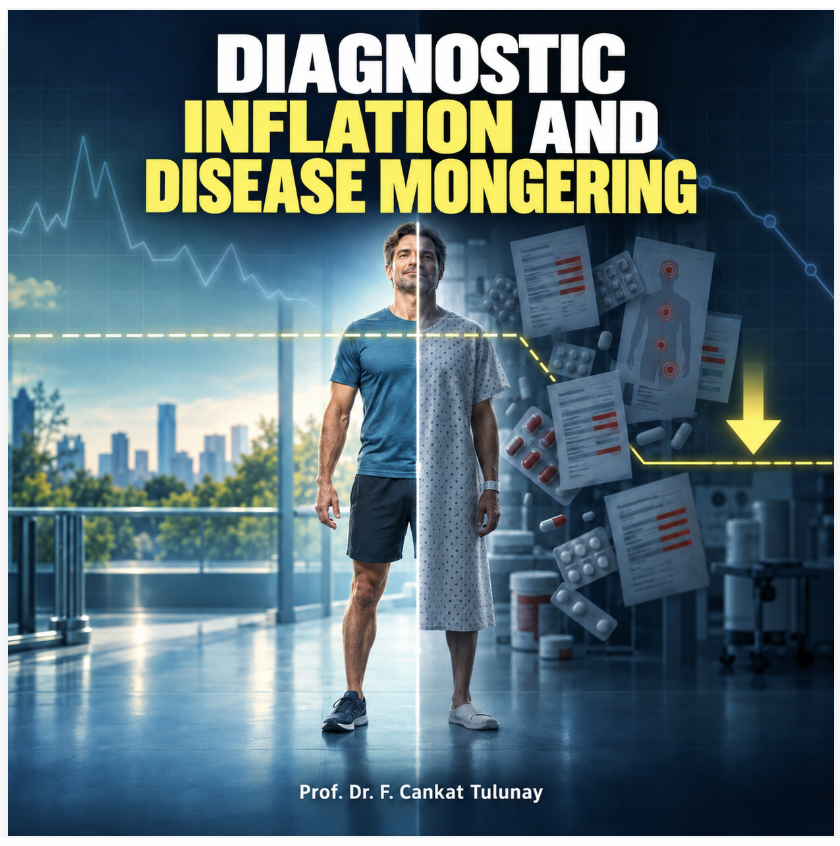
DIAGNOSTIC INFLATION AND THOSE WHO DECEIVE WITH DISEASE
What Is “Diagnostic Inflation”?
“Diagnostic inflation” describes the process by which an ever-larger number of people who were once considered healthy, or who merely carried a risk, or whose experience fell within the ordinary fluctuations of life, are brought under a disease label. This is not simply a matter of physicians diagnosing more; the real issue is that the boundary of disease itself is shifting:
• Lowering of diagnostic thresholds
• Bringing mild and borderline symptoms within the scope of disease
• Creation of new “pre-disease” categories
• Diagnosis based on a biomarker or imaging finding in the absence of symptoms
• Medicalization of normal aging, sadness, inattention, or bodily variation
• Presenting disease risk as though it were the disease itself
• Creation of entirely new diagnostic categories
Diagnostic inflation can be defined most concisely as follows: the expansion of disease boundaries to cover more people without proof of clinical benefit.
It should be kept in mind, however, that the concept is a critical term. Not every rise in diagnoses is diagnostic inflation. An increase in diagnoses can also stem from a genuine rise in disease frequency, improved access to health care, or the more accurate recognition of patients who were previously overlooked.
The Concepts Must Be Distinguished
Diagnostic inflation, overdiagnosis, misdiagnosis, and overtreatment are often used interchangeably. Yet these are not the same thing.
Concept | Meaning |
Diagnostic inflation | The gradual expansion of a disease definition or diagnostic practice to cover an ever-wider population |
Overdiagnosis | Detection of a disease that is technically real, but that would never cause symptoms, harm, or death during the person's lifetime |
Misdiagnosis | Attributing a disease to someone who does not have it, or incorrectly labeling a real disease |
False-positive result | An initial test suggests disease, but confirmatory work-up finds none |
Overtesting | Performing tests that are not expected to benefit the patient |
Overtreatment | Unnecessary or disproportionate treatment with no clear clinical benefit |
Medicalization | Redefining normal life events or social problems in the language of medical illness |
Disease mongering | Widening disease boundaries specifically to create or grow a commercial market |
Diagnostic inflation is a systemic, classification-level problem, whereas overdiagnosis is mostly its consequence at the level of an individual patient. Diagnostic inflation can lead to overdiagnosis, but the two concepts do not map onto each other one to one.
For example, diagnosing a person with no complaints, during screening, with a very small thyroid cancer that would never have caused a problem in their lifetime is overdiagnosis. By contrast, the spread of thyroid ultrasonography to everyone regardless of risk, the lowering of biopsy thresholds for very small lesions, and keeping microscopic abnormalities within the “cancer” category are the systemic processes that constitute diagnostic inflation. [1]
CONCRETE EXAMPLE: Autopsy Studies: The “Silent” Pool of Thyroid Cancer Here, the pathology report is not wrong; the tissue genuinely contains cancer cells. The problem is that very different biological behaviors are grouped under the same name. When the thyroid glands of people who died of unrelated causes (a car accident, a heart attack) and who never had any thyroid complaint are carefully sectioned and examined, occult papillary thyroid microcarcinoma (under 1 cm) is found in 3-36% of autopsy series, and in one Finnish study, in 35.6%; a meta-analysis of studies that examined the whole gland found a rate of 11.2%. These people lived with the lesion for years, never showed a symptom, and died of a cause other than cancer. Active-surveillance studies confirm the same conclusion: among patients with papillary microcarcinoma under 1 cm who were not operated on and were followed for 10-17 years, only 3-5% showed growth or spread, and no cancer deaths were reported. Most of the thyroid cancers found through screening in South Korea come from exactly this silent pool; this also explains why screening raised the number of diagnoses without changing the death rate. [18][19] |
The Difference Between Diagnostic Inflation and Disease Mongering
These two concepts, both listed in the table above, are often used interchangeably, and there is genuine overlap between them. But they are not the same thing; clarifying the difference also clarifies how each problem can be addressed.
Diagnostic inflation is, at the system level, most often an outcome independent of intent: the expansion of a disease boundary through a guideline committee's decision, screening technology, laboratory sensitivity, or a shift in clinical consensus. Even while a panel of experts evaluates new evidence in good faith, specialist bias or excessively cautious threshold-setting can lead to diagnostic inflation; there may be no single responsible company or campaign behind it.
Disease mongering is a much narrower and deliberate concept: the conscious presentation of a condition or a risk as a disease in order to grow the market for a product, the use of fear as a marketing tool, and the systematic mobilization of patient associations, “awareness” campaigns, sponsored continuing-education programs, and key opinion leaders to that end. Here there is an actor (usually a pharmaceutical or device company), a documentable commercial intent, and often a written marketing plan.
In other words: every instance of disease mongering contributes to diagnostic inflation, but not every instance of diagnostic inflation is disease mongering. The silent pool of thyroid microcarcinoma found in autopsy studies, or the lowering of the blood-pressure threshold following scientific debate, can lead to diagnostic inflation without any deliberate marketing campaign at all. By contrast, in examples such as “overactive bladder” or “hypoactive sexual desire disorder,” it can be documented that the disease itself was “invented” within the framework of a marketing plan.
This distinction can be shown with concrete examples drawn from articles we have published on this subject for years.
“A vice president of Pharmacia gave a presentation, without any embarrassment, titled ‘The invention of overactive bladder syndrome. Detrol (tolterodine) was identified as the first, new, global mass marketing opportunity.’ (...) A look at the Detrol slides shows, on slide 20, how Detrol's sales would grow 2.7-fold once a new disease was created, and on slide 22, the ‘critical success factors’ required for that growth. IT'S NOT A WORLD OF R&D, IT'S A WORLD OF PROFIT (“AR DÜNYASI DEĞİL, KAR DÜNYASI”), klinikfarmakoloji.com, 2019 — https://klinikfarmakoloji.com/aci-ilac/ar-dunyasi-degil-kar-dunyasi |
This example is one of the clearest documents showing the difference between disease mongering and diagnostic inflation: urinary incontinence had been a known, genuine medical condition for decades. The name “overactive bladder” was manufactured, defined in a company's own internal presentation as the “first global mass marketing opportunity,” for the purpose of increasing sales by a pre-calculated amount. Here, what drove diagnostic inflation was not scientific uncertainty but a written marketing plan.
“Henry Gadsden, president of Merck, one of the world's best-known pharmaceutical companies, told Fortune magazine of his regret that Merck's potential market was limited to sick people; he said he would have preferred Merck to be more like the chewing-gum maker Wrigley, because then Merck could ‘sell to everyone.’ HEALTH HEIST: DECEIVING WITH DISEASE, ROBBING WITH DRUGS (“SAĞLIK SOYGUNU”), klinikfarmakoloji.com, 2024 — https://klinikfarmakoloji.com/aci-ilac/saglik-soygunu-hastalikla-kandirip-ilacla-soyanlar |
Gadsden's admission sums up the intent at the historical root of disease mongering: to grow a market that was limited to a patient population by selling to a healthy population instead. The “types of disease mongering” classification we compiled in the same article (broadening disease definitions, medicalizing normal conditions, creating new diseases) overlaps with the diagnostic-inflation mechanisms defined here; the difference is that in this case the mechanisms are documented as a company's conscious strategy. The examples discussed in the same article, restless legs syndrome (Requip), premenstrual dysphoric disorder, and the conversion of hypoactive sexual desire disorder into FSIAD, follow the same pattern: a real but rare or contested condition is reframed for a broad market.
“Normal human experiences have been increasingly medicalized. Sadness has become the territory of depression, shyness of social anxiety, aging of testosterone deficiency, everyday distractibility of ADHD, and a few extra kilos the territory of chronic pharmacological intervention. (...) Healthy individuals are being funneled into endless laboratory tests, check-up packages, serum infusion cures, and ‘anti-aging’ programs. BRANDED DOCTORS, BRANDED FRAUDS (“MARKALI DOKTORLAR, MARKALI SAHTEKARLAR”), klinikfarmakoloji.com, 2026 — https://klinikfarmakoloji.com/aci-ilac/markali-doktorlar-markali-sahtekarlar |
This more recent example matters because, alongside the classic form of disease mongering (an internal company presentation, a targeted speaker program), it adds a more diffuse form that today runs through social media and the wellness industry and is often not reducible to a single company. Categories with weak scientific backing, such as “adrenal fatigue,” “biological age,” or “hormonal imbalance,” may not be tied to the launch of a single product; yet they carry the same underlying logic of turning a healthy person into someone who constantly needs testing and intervention. This shows that diagnostic inflation is now fed not only by guideline committees and pharmaceutical companies, but by the digital marketing economy as well.
In short: the question to ask about disease mongering is “who is growing this disease, with what intent, and under what commercial plan?” while the question to ask about diagnostic inflation is “did this disease's boundary expand without proof of clinical benefit?” The former examines an actor's behavior; the latter, the outcome of a classification system. It is common for a single case (overactive bladder, for instance) to illustrate both; but the conceptual distinction is necessary to direct the remedy to the actual source of the problem: the remedy for disease mongering is transparency and oversight of marketing, while the remedy for diagnostic inflation is independent guideline development and independent impact assessment of threshold changes.
How Does Diagnostic Inflation Occur?
1. Lowering of Numerical Thresholds
Blood pressure, blood glucose, cholesterol, bone density, kidney function, and hormone levels are measurements with a continuous distribution. In nature, there is not always a sharp line between “normal” and “diseased”; the line is drawn by a panel of experts.
When a diagnostic threshold is lowered, people's biology does not change overnight; but the next day, millions of people can fall into a new disease category. Such a change can be beneficial. But for that, it must be shown that treatment improves patient-important outcomes, such as death, stroke, myocardial infarction, kidney failure, or loss of function, in the newly diagnosed low-risk group. Lowering a blood-pressure or laboratory value alone is not enough.
CONCRETE EXAMPLE: The 2017 ACC/AHA Hypertension Guideline Until 2017, the threshold for a hypertension diagnosis had been accepted for decades as 140/90 mmHg. In 2017, the ACC/AHA guideline lowered this threshold to 130/80 mmHg and eliminated the “prehypertension” category, reclassifying that group directly as “stage 1 hypertension.” Under the new definition, hypertension prevalence in the US rose from 32% to 46%; in other words, roughly 31 million people who had previously been considered healthy received a hypertension diagnosis overnight. Among adults under 45, the rate doubled. [2][3] |
2. Turning a Risk Factor into a Disease
“Prediabetes,” “prehypertension,” “osteopenia,” “mild cognitive impairment,” and some “pre-cancerous” conditions indicate the likelihood of future disease; but a risk is not the disease itself.
Defining a risk category can be useful for preventive intervention. The problem is treating everyone with a low absolute risk as “ill” and automatically converting risk-reduction advice into drug treatment. Three questions should be asked here: How many people in this category actually progress to disease? Does the intervention meaningfully prevent that progression or clinical events? How many people must be monitored or treated for years to find the small number who will benefit?
CONCRETE EXAMPLE: The ADA's Lowering of the Prediabetes Threshold (2003) The American Diabetes Association (ADA) had defined “impaired fasting glucose” as 110 mg/dl in 1997. In 2003, it lowered this threshold to 100 mg/dl, with the stated aim of aligning the risk classification of fasting glucose with that of the oral glucose tolerance test. This single change significantly expanded the population falling under prediabetes. According to 2015 data from the US Centers for Disease Control and Prevention (CDC), 33.9% of US adults (roughly 84 million people) met the criteria for prediabetes; only 11.9% of them had been informed of this by a health professional. [4][5] |
3. Bringing Milder Forms of a Disease Within Scope
Reducing the number of symptoms required for a diagnosis, shortening the required duration of symptoms, or loosening the functional-impairment criterion can bring mild cases into the disease category.
The Norwegian researcher Bjørn Hofmann classifies excessively expanding diagnoses under three headings: too much (diagnosing too many conditions), too mild (counting very mild symptoms as disease), and too early (diagnosing at a stage far too early to know whether a future problem will ever develop). This classification shows that diagnostic inflation is not solely a matter of “too much testing”; it is also related to the severity and timing of disease. [6]
CONCRETE EXAMPLE: Removal of the “Bereavement Exclusion” from DSM-5 DSM-III and DSM-IV excluded depressive symptoms arising within the first two months after the loss of a loved one from a major depression diagnosis, even if they otherwise met the criteria (the “bereavement exclusion”). DSM-5 (2013) removed this exclusion; a person in the grieving process can now receive a major depression diagnosis if they meet the two-week symptom threshold. DSM-IV task force chair Allen Frances criticized this as “the medicalization of normal emotion,” while defenders of the change argued that there is no evidence that grief-related depression differs from other forms of depression, and that unrecognized depression carries a suicide risk. This example shows that the debate is not one-sided; the field itself contains a legitimate scientific disagreement. [7][8] |
4. Creation of New Diagnostic Categories
A new category can genuinely describe an unmet clinical need. However, adding a new diagnosis to a classification system without first showing that it is clearly distinguishable from normal experience, that it can be reliably recognized, that it is stable over time, and that it leads to a specific intervention that benefits the patient, can produce diagnostic inflation.
The moment a new name is assigned, a whole chain of consequences follows: a screening scale, a specialty clinic, a drug indication, a patient association, an education program, a reimbursement claim, and a new market.
CONCRETE EXAMPLE: Premenstrual Dysphoric Disorder and Prozac → Sarafem Shortly before Eli Lilly's patent on Prozac (fluoxetine) expired in 1999, the company submitted the same molecule to the FDA for approval under the name “Sarafem,” with the newly defined indication of Premenstrual Dysphoric Disorder (PMDD). PMDD had been a contested category placed in an appendix in earlier DSM editions; in DSM-5 it was classified as an independent mood disorder. In a warning letter sent to Lilly in December 2000, the FDA stated that the advertising did not sufficiently clarify the difference between PMDD and ordinary premenstrual syndrome (PMS). This case shows how a new diagnostic category can directly coincide with a patent-extension strategy. [9][10] |
5. Technology Making the “Reservoir of Disease” Visible
High-resolution imaging, genetic tests, continuous biological monitoring devices, and more sensitive laboratory methods reveal a great many abnormalities in the human body that were never seen before. But a “more sensitive” test is not necessarily a “more useful” one; small nodules, cysts, slow-growing tumors, anatomical variants, and genetic variants of uncertain clinical significance are very common in the bodies of healthy people.
Two conditions must be met for overdiagnosis to appear in cancer: a silent reservoir of disease that produces no symptoms, and intensive screening or testing activity that detects it. [11]
CONCRETE EXAMPLE: South Korea's Thyroid Cancer “Epidemic” In 1999, South Korea added thyroid ultrasonography as a cheap add-on to its free national cancer-screening program. By 2011, the thyroid cancer diagnosis rate had risen 15-fold compared with 1993, and the country had come to have the world's highest incidence of thyroid cancer. Yet over the same period, the death rate from thyroid cancer remained flat. The analysis published by Ahn, Kim, and Welch in the New England Journal of Medicine in 2014 concluded that this was not a genuine rise in disease but the overdiagnosis of very small (under 1 cm) papillary cancers that would never have caused harm during the person's lifetime. Following a public campaign launched by eight Korean physicians in 2014, the number of thyroid surgeries fell markedly. [12][13] |
6. Incidental Findings (Incidentaloma)
Adrenal, thyroid, kidney, lung, or pituitary lesions detected on a CT or MRI scan performed for another reason set off new chains of testing. These “incidentalomas” sometimes allow an important disease to be caught early; but since most are harmless, they can also produce repeated imaging, biopsy, surgery, ongoing anxiety, and insurance or employment problems for the patient. Most of the small thyroid nodules in the South Korean example are, in fact, incidental findings of exactly this kind.
7. Expansion of Screening Programs
Screening is performed in a symptom-free population and saves lives in some diseases. But the success of a screening program cannot be judged merely by how much more early-stage disease it finds. The real measures of success are: Does advanced-stage disease decrease? Does disease-specific mortality decrease? Is overall mortality or serious morbidity affected? How large are the harms from false positives, overdiagnosis, and overtreatment? How large is the absolute benefit?
A rise in five-year survival after the introduction of screening is not, by itself, proof of benefit. Because the time of diagnosis is moved earlier while the date of death is unchanged, “survival time since diagnosis” can appear longer even though nothing has changed (lead-time bias). Screening is also more likely to catch slow-growing, harmless lesions (length-time bias). Thyroid screening in South Korea is a textbook example of both biases.
Diagnostic Inflation in Psychiatry
The concept has come up especially in debates over the DSM. Psychiatric diagnoses are usually built not on a single biomarker but on a clinical assessment of symptom count, duration, severity, context, and functional impairment. This is why where the line is drawn between normal distress and mental disorder matters so much.
Criticism concentrates particularly in the following areas:
• Grief and ordinary sadness being conflated with depression (discussed above)
• Childhood restlessness or poor fit with school being counted as ADHD
• Mood fluctuations being brought under the bipolar spectrum
• Everyday worry being labeled an anxiety disorder
• Age-related forgetfulness being treated as early neurocognitive disease
• Temper outbursts being turned into a separate disease category
• Social and economic problems being viewed as individual psychopathology
There is, however, an important piece of counter-evidence here. A 2020 meta-analysis by Fabiano and Haslam evaluated 123 comparisons and 476 risk ratios of diagnostic rates in the same samples across successive DSM editions. The average relative diagnostic rate was found to be 1.00; no systematic, across-the-board loosening of diagnostic criteria from DSM-III to DSM-5 could be demonstrated. Some diagnoses expanded while others narrowed. [14]
This finding does not mean “there is no diagnostic inflation in psychiatry”; it yields a narrower conclusion: taken as a whole, the criteria changes across DSM editions did not produce a one-directional, systematic rise in diagnoses in the studies examined. In real life, a rise in diagnoses can also occur through other routes, such as screening scales replacing the clinical interview, self-diagnosis via social media, a diagnostic code being required to access services, and the justified recognition of previously neglected groups.
The composition of the panels is itself part of this debate. It has been shown that 57% of DSM-IV task force members and 69-70% of DSM-5 task force members had financial ties to the pharmaceutical industry; in panels where drug treatment is the primary option (mood disorders, psychotic disorders, sleep disorders), this figure has been shown to reach 83-100%. This data does not prove that a given criteria change was invalid; but it does explain why the independence of the bodies that change diagnostic criteria should be a separate matter of oversight. [15]
Other Examples from General Medicine
The mechanisms above can be observed across different diseases in nearly every branch of medicine:
• Chronic kidney disease: An estimated glomerular filtration rate below a certain value can automatically produce a chronic kidney disease label, especially in the elderly; yet the decline of kidney function with age, in the absence of albuminuria, may indicate a very low individual risk.
• Osteopenia and osteoporosis: Bone mineral density is a continuous variable; the T-score threshold defined by the World Health Organization in 1994 is a risk category, and does not by itself mean an inevitable fracture disease. The treatment decision should rest not on the T-score alone but on age, prior fracture, fall risk, and absolute fracture probability.
• Thyroid disorders: Interpreting a mild elevation of thyroid-stimulating hormone, especially in elderly, asymptomatic individuals, as directly requiring disease status and treatment can widen the diagnosis of subclinical hypothyroidism.
• Polycystic ovary syndrome: As diagnostic criteria have broadened, more young women with mild androgen symptoms, irregular cycles, or a particular ultrasound appearance can fall within the syndrome; while the label helps some women, in mild cases it can produce unnecessary anxiety.
• Prostate and breast cancer: As in the South Korean thyroid example, debate continues over whether a lesion found on PSA screening or mammography, though genuinely bearing “cancer” histology, may never progress to clinical disease; for this reason, active surveillance rather than “immediate treatment” has come to the fore for some low-risk lesions.
Who and What Forces Are Feeding Diagnostic Inflation?
Commercial Incentives
As the diagnosed population grows, so does the market for drugs, tests, imaging, devices, and health services. That said, it would be reductive to claim that every expansion of a disease is created by the pharmaceutical industry; academic prestige, advocacy groups, reimbursement structures, legal concerns, and patient demand also play a role.
CONCRETE EXAMPLE: Moynihan's Guideline Survey and Marketing Spending Moynihan and colleagues examined 16 guidelines or expert-panel publications concerning 14 common conditions; they found the disease definition had been widened in ten of them and narrowed in only one. Methods of expansion included creating pre-disease categories, lowering thresholds, and proposing earlier diagnostic methods. According to a separate JAMA review, the number of direct-to-consumer disease-awareness campaigns in the US rose from 44 to 401 between 1997 and 2016, while medical marketing spending rose from $17.7 billion to $29.9 billion; the campaigns covered areas such as ADHD, depression, insomnia, migraine, and low testosterone. This data does not, by itself, prove that the conflict of interest directly caused the expansion; but it does point to a serious governance problem. [16][17] |
The Structure of Guideline Panels
Guideline panels are usually made up of specialists in a given disease area. Because these specialists see the severe consequences of the disease up close, they may naturally place greater value on early diagnosis (specialist bias). If a panel consists solely of disease specialists, how many healthy people will be declared ill, and the harms of treatment, can fade into the background. For this reason, panels that change a disease definition should include primary-care physicians, epidemiologists, methodologists, patient representatives, and members free of conflicts of interest.
Defensive Medicine and Reimbursement Systems
Physicians may fear “missing something” more than they fear overdiagnosing. The legal system also visibly punishes a missed diagnosis while largely leaving the diffuse, delayed harms of overdiagnosis invisible. Fee-for-service payment, screening targets, and diagnosis-code-linked reimbursement can likewise reward more testing and more diagnosis; in some systems, a patient can access medication, psychotherapy, or social support only by receiving a specific diagnosis. In this way, a diagnosis becomes less a clinical explanation than a ticket of entry to a service.
Society and Social Media
“Early diagnosis saves lives” is true for some diseases, but it is not an unconditional law. Social media strips symptoms of their context and turns them into checklists: phrases such as “if you have three of these, you might have it too,” “the disease doctors miss,” or “your normal tests are misleading you” reduce tolerance for uncertainty and turn a healthy person into a consumer perpetually in search of a diagnosis.
The Harms of Diagnostic Inflation
• Personal harms: The shift from “I carry a risk” to “I am ill,” feelings of anxiety and fragility, interpreting normal bodily sensations as disease symptoms, and consequences for insurance or career choices.
• Treatment harms: Adverse drug effects, drug interactions, polypharmacy, biopsy and surgical complications, radiation exposure. As absolute benefit shrinks in low-risk patients, the harms of treatment approach or exceed the benefit.
• Diagnostic cascade: A borderline test result prompts another test, which in turn produces a new incidental finding; that finding can set off a chain of imaging, biopsy, and consultation, producing a “diagnostic cascade” far costlier than the original test.
• Harm to the health system: It raises drug and testing expenditure, fills specialist appointment slots, delays access to care for people who are genuinely ill, and diverts large resources to a low-risk population. In this respect, diagnostic inflation is not only an individual problem but also one of justice and resource allocation.
There Are Also Cases Where Expanding a Diagnosis Is Beneficial
The concept should not be used as an argument against early diagnosis as such. Throughout history, many groups have genuinely been underdiagnosed: heart disease in women, ADHD in adults, autism in women and adults, rare diseases, chronic pain syndromes, postpartum depression, and mild but functionally impairing neurological conditions. New criteria can make these patients visible, reduce stigma, and improve access to treatment.
The core question, therefore, is not “did the number of diagnoses go up?” The question that should be asked is: in the additional group that newly receives the diagnosis, does the total clinical benefit of diagnosing and intervening exceed the total harm?
How Is Diagnostic Inflation Recognized?
It is often difficult to show that a single individual was overdiagnosed; for this reason, overdiagnosis is usually detected at the population level. The following indicators raise suspicion:
• A very rapid rise in diagnostic incidence
• Rates of severe disease or death not falling to a comparable degree (as in the South Korean thyroid example)
• The rise being concentrated especially in mild and early stages
• A large jump in diagnoses immediately following a new technology or a threshold change
• Large differences between regions that cannot be explained by disease biology
• More diagnoses in places with intensive testing, but similar death rates
One of the strongest pieces of evidence is an excess of diagnoses that persists for years, even in a randomized screening trial, in the screened group. If screening had merely moved the diagnosis earlier, the control group would eventually catch up; a persistent difference suggests that some of the additional cases would never have become clinically apparent at all.
How Should Diagnostic Criteria Be Changed?
Every proposal that widens a disease boundary should be handled with a rigor comparable to the evaluation of a new drug. At a minimum, the following questions should be answered:
1. How many new people will fall into the patient category?
2. What is these people's absolute risk if untreated?
3. Are there randomized trials testing treatment in the newly diagnosed mild group?
4. Are clinical outcomes improving, or only biomarkers?
5. What is the number needed to treat (NNT)?
6. What is the number needed to harm (NNH)?
7. What is the probability of false positives and overdiagnosis?
8. Could the same lifestyle support be provided without a disease label?
9. Do panel members have financial or academic conflicts of interest?
10.Can the criterion be narrowed again in the future, and the diagnosis withdrawn?
A new diagnostic criterion should first undergo an independent impact assessment, and then be monitored with real-world data. It is not only the sensitivity of the criterion that should be evaluated, but also its specificity and its net clinical benefit.
“De-diagnosis”: Can a Diagnosis Be Withdrawn?
Medicine is organized around making diagnoses; there are very few mechanisms for removing one. Once a diagnosis enters the electronic record, it can influence prescriptions, referrals, and clinical decision-support systems for years. This has led to the development of a “de-diagnosing” approach. A diagnosis should be reconsidered when: the criteria were never fully met; the diagnosis rests on a single, transient test result; there is no symptom or functional impairment; the disease has not progressed for years; or the diagnosis provides no benefit to the patient but creates anxiety and treatment burden. Withdrawing a diagnosis is not abandoning the patient; monitoring and re-evaluation, when needed, can continue.
An Assessment for Turkey
Comprehensive, independent data quantitatively examining diagnostic inflation in Turkey are limited. At the same time, there are many structural features that could feed the phenomenon: short consultation times, test-driven care, fragmented electronic health records, patients being able to repeat the same tests at different centers, volume-based incentives in the private health sector, the expectation of rapid access to drugs and tests, unregulated health marketing on social media, and drug/reimbursement rules tied to diagnosis codes.
Prediabetes, insulin resistance, vitamin deficiencies, thyroid nodules, osteopenia, polycystic ovary syndrome, attention deficit, “food intolerance,” and various claims of hormonal insufficiency are areas particularly worth examining from this angle in Turkey. But for each of these areas, showing a rise in sales or diagnosis counts is not enough; true prevalence, age distribution, testing intensity, thresholds used, clinical outcomes, and treatment rates must all be assessed together.
Conclusion
Diagnostic inflation is less a failure of medicine than the risk of modern medicine's power being misused. More sensitive tests, earlier diagnosis, and broader disease knowledge can enable the prevention of serious disease. The same tools, used without questioning clinical benefit, can turn healthy people into patients; the 2017 hypertension threshold, the 2003 prediabetes threshold, and South Korea's thyroid cancer experience are concrete examples of this risk.
The problem is not “too many diagnoses” but diagnoses that provide no benefit. A rise in the number of diagnoses is not, by itself, proof of inflation, any more than early diagnosis automatically means benefit. Widening a disease boundary is not merely a scientific act of classification; it is a clinical, economic, and political decision that determines who will be counted as ill, who will take medication, where health resources will be directed, and how people will come to see themselves.
For this reason, the goal of modern medicine should not be to find as much disease as possible, but to recognize, in the right person and at the right time, the disease that will provide the patient with a real and measurable benefit.
References
1. Welch HG, Black WC. Overdiagnosis in Cancer. J Natl Cancer Inst. 2010;102(9):605-613. https://pubmed.ncbi.nlm.nih.gov/20413742/
2. Whelton PK, et al. 2017 ACC/AHA/AAPA/ABC/ACPM/AGS/APhA/ASH/ASPC/NMA/PCNA Guideline for the Prevention, Detection, Evaluation, and Management of High Blood Pressure in Adults. https://www.ccjm.org/content/85/10/771
3. Muntner P, et al. Potential US Population Impact of the 2017 ACC/AHA High Blood Pressure Guideline. Circulation, 2018 (Medscape summary). https://www.medscape.com/viewarticle/888560
4. American Diabetes Association. 2. Diagnosis and Classification of Diabetes: Standards of Care in Diabetes. Diabetes Care, 2024/2026. https://diabetesjournals.org/care/article/47/Supplement_1/S20/153954/2-Diagnosis-and-Classification-of-Diabetes
5. Low-Carbohydrate Dietary Pattern on Glycemic Outcomes Trial protocol; CDC 2015 prediabetes prevalence data. https://cdn.clinicaltrials.gov/large-docs/60/NCT03675360/Prot_SAP_000.pdf
6. Hofmann B. Too much, too mild, too early: diagnosing the excessive expansion of diagnoses. Int J Gen Med, 2022. https://pmc.ncbi.nlm.nih.gov/articles/PMC9365059/
7. Pies R. The Bereavement Exclusion and DSM-5: An Update and Commentary. Innov Clin Neurosci. 2014;11(7-8):19-22. https://pmc.ncbi.nlm.nih.gov/articles/PMC4204469/
8. Bereavement Exclusion May Be Gone From New DSM Edition. Psychiatric News, 2011. https://www.psychiatryonline.org/doi/10.1176/pn.46.20.psychnews_46_20_3_1
9. Cosgrove L. Diagnosing Conflict-of-Interest Disorder. Academe (AAUP), Nov-Dec 2010. https://www.aaup.org/academe/issues/2010-issues-4/diagnosing-conflict-interest-disorder
10. Cosgrove L, Wheeler EE. Industry's Colonization of Psychiatry: Ethical and Practical Implications of Financial Conflicts of Interest in the DSM-5. Feminism & Psychology, 2013. https://scholarworks.umb.edu/cgi/viewcontent.cgi?article=1007&context=counseling_faculty_pubs
11. Welch HG, Black WC. Overdiagnosis in Cancer. J Natl Cancer Inst. 2010;102(9):605-613. https://pubmed.ncbi.nlm.nih.gov/20413742/
12. Ahn HS, Kim HJ, Welch HG. Korea's Thyroid-Cancer “Epidemic” — Screening and Overdiagnosis. N Engl J Med. 2014;371:1765-1767. https://www.nejm.org/doi/abs/10.1056/NEJMp1409841
13. South Korea's Thyroid-Cancer “Epidemic” — Turning the Tide. N Engl J Med. 2015. https://www.ecmstudy.com/uploads/3/1/8/8/31885023/south_koreas_tyroid_cancer_epidemic-turning_the_tide.pdf
14. Fabiano N, Haslam N. Has the concept of depression become more inclusive over time? A meta-analysis. J Affect Disord, 2020 (PubMed summary). https://pubmed.ncbi.nlm.nih.gov/32736153/
15. Davis LC, Diianni AT, Drumheller SR, et al. Undisclosed financial conflicts of interest in DSM-5-TR: cross sectional analysis. BMJ. 2024;384:e076902. https://pmc.ncbi.nlm.nih.gov/articles/PMC10777894/
16. Moynihan RN, et al. Expansion of disease definitions and industry funding: an empirical assessment. PLOS Medicine. https://journals.plos.org/plosmedicine/article?id=10.1371/journal.pmed.1001500
17. Direct-to-consumer disease awareness campaigns and pharmaceutical marketing spending, 1997-2016. JAMA. https://jamanetwork.com/journals/jama/fullarticle/2720029
18. Furuya-Kanamori L, et al. Prevalence of Differentiated Thyroid Cancer in Autopsy Studies Over Six Decades: A Meta-Analysis. J Clin Oncol, 2016; also Harach HR, et al. Occult papillary carcinoma of the thyroid: a “normal” finding in Finland. Cancer, 1985. https://ascopubs.org/doi/10.1200/JCO.2016.67.7419
19. Piersanti M, Ezzat S, Asa SL. Controversies in papillary microcarcinoma of the thyroid (autopsy incidence 3-36%). Endocr Pathol, 2003. https://pubmed.ncbi.nlm.nih.gov/10836212/
20. Tulunay FC. HEALTH HEIST: DECEIVING WITH DISEASE, ROBBING WITH DRUGS (“SAĞLIK SOYGUNU: HASTALIKLA KANDIRIP, İLAÇLA SOYANLAR”). klinikfarmakoloji.com, Acı İlaç, 28.07.2024. https://klinikfarmakoloji.com/aci-ilac/saglik-soygunu-hastalikla-kandirip-ilacla-soyanlar
21. Tulunay FC. IT'S NOT A WORLD OF R&D, IT'S A WORLD OF PROFIT (“AR DÜNYASI DEĞİL, KAR DÜNYASI”). klinikfarmakoloji.com, Acı İlaç, 19.07.2019. https://klinikfarmakoloji.com/aci-ilac/ar-dunyasi-degil-kar-dunyasi
22. Tulunay FC. BRANDED DOCTORS, BRANDED FRAUDS (“MARKALI DOKTORLAR, MARKALI SAHTEKARLAR”). klinikfarmakoloji.com, Acı İlaç, 20.05.2026. https://klinikfarmakoloji.com/aci-ilac/markali-doktorlar-markali-sahtekarlar
Note: AI assistance was used in this article.